
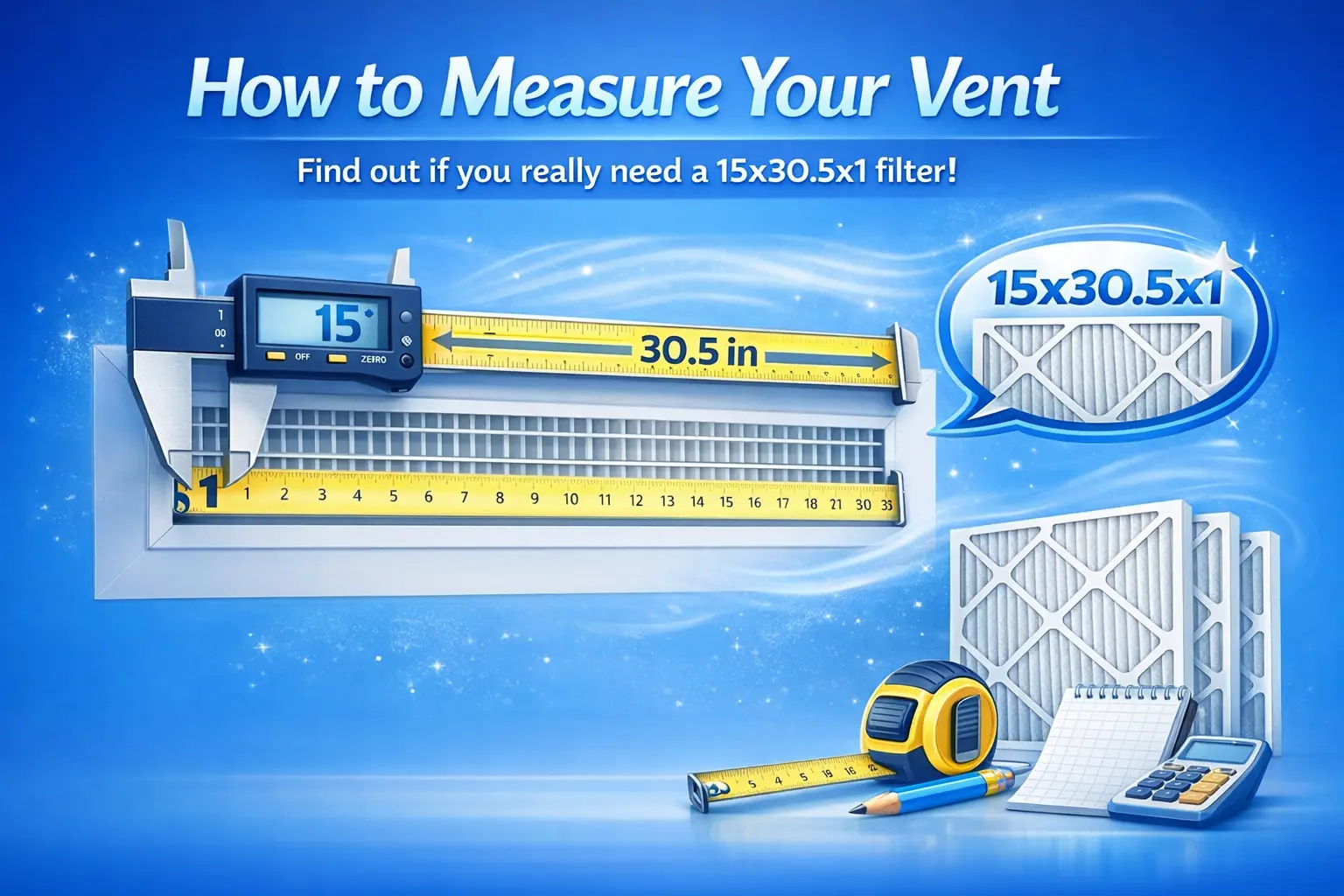
If you’ve ever stared at your vent wondering whether you really need a 15×30.5×1 filter, you’re in good company—our HVACClarity team sees this exact confusion every week. After helping tens of thousands of homeowners solve airflow issues, we’ve learned that the real problem usually isn’t the filter at all… it’s the measurement. Even a tiny misread—⅛ of an inch—can create air leaks, reduce system efficiency, and force your HVAC to work harder than it should.
Based on what we’ve seen in the field and through customer support, we’ll walk you through the same simple measuring process our experts use to confirm whether a 15×30.5×1 is truly your best match. By the end, you’ll know how to avoid the most common sizing mistakes, what measurements actually matter, and how to choose a filter that protects your home (and your wallet) with the precision your system deserves.
Quick Answers
How to Measure Your Vent to See if You Really Need a 15×30.5×1 Filter
- Measure the inside opening of your return vent—not the old filter.
- Record width, height, and slot depth to the nearest ⅛ inch.
- If your opening is close to 15″ x 30.5″ with a 1″ slot, that’s your correct size.
- At HVACClarity, we see many sizing mistakes caused by relying on old labels—trust the vent opening every time.
- A proper fit prevents air bypass, boosts filtration efficiency, and protects your HVAC system.
Top Takeaways
- Measure the vent opening, not the old filter.
- Even ⅛-inch gaps can cause air bypass.
- 15×30.5×1 must match your exact opening size.
- Correct sizing improves airflow, air quality, and efficiency.
- When in doubt, verify your measurements before ordering.
Table of Contents
How to Measure Your Vent Correctly
Before you buy a 15×30.5×1 filter, you need to confirm whether your system actually requires that size. HVAC vents and returns aren’t always labeled accurately, and after helping homeowners nationwide with mis-sized filters, we’ve found that a quick measurement is the most reliable way to know — especially if you’re aiming for better air quality in your home.
1. Remove the Old Filter (If There Is One)
Slide the existing filter out and check the printed size on the frame. While it’s a helpful reference, don’t rely on it alone—many systems have been fitted with the wrong size over time.
2. Measure the Vent Opening, Not the Filter
Using a tape measure, record the exact width and height of the vent’s inside opening (not the outer frame). For accuracy, measure to the nearest 1/8 inch.
• If your opening is close to 15″ x 30.5″, your system is designed for a 15×30.5×1 filter.
• If it’s slightly larger or smaller, you may need a custom size or a different nominal measurement.
3. Confirm Filter Thickness
Most return vents take a 1-inch filter, but don’t assume—measure the slot depth to confirm that a 1-inch filter slides in cleanly without wiggle room or resistance.
4. Check for Gaps or Air Leaks
Even if the size seems right, gaps along the edges mean air can bypass the filter. A proper 15×30.5×1 should sit securely with no visible space around the frame. If you see gaps, sizing may be off by a fraction, which affects airflow and efficiency.
5. When in Doubt, Match Your Exact Opening Size
At HVACClarity, we custom-make thousands of less-common filter dimensions—including 15×30.5×1—to ensure a perfect seal when standard sizes don’t fit. If your opening doesn’t match typical measurements, you’re not stuck we can build the precise size your system needs.

“One of the most common issues we see isn’t a ‘bad filter’ it’s a mis-measured filter. After reviewing thousands of customer photos and system setups, we’ve learned that even being off by an eighth of an inch can let unfiltered air slip right past your system. When homeowners measure the vent opening instead of the old air filter, they get the right size every time and their HVAC instantly performs better.”
Essential Resources to Help You Confidently Verify Whether You Need a 15×30.5×1 Filter
When you’re trying to confirm the exact filter size your system needs, the best thing you can do is lean on trusted, no-nonsense sources. These seven .gov / .edu / .org resources give you the clear, factual guidance you need to measure correctly, understand airflow, and choose a filter that actually works for your system.
1. EPA: Air Cleaners & Air Filters in the Home
What this helps you do: Understand the basics before you measure anything.
This guide quickly explains how filters fit into your HVAC system, why size matters, and how they impact airflow and indoor air quality.
Source: https://www.epa.gov/indoor-air-quality-iaq/air-cleaners-and-air-filters-home
2. EPA: Guide to Air Cleaners in the Home (2nd Edition)
What this helps you do: Get straight-forward guidance on choosing the right type and size.
If you want simple, practical explanations without technical overload, this is an ideal primer before confirming whether a 15×30.5×1 fits your return vent.
Source: https://www.epa.gov/indoor-air-quality-iaq/guide-air-cleaners-home
Source: 3. EPA: Residential Air Cleaners – Technical Summary
What this helps you do: Understand how airflow, pressure drop, and filter dimensions work together.
This resource gives you the “big picture” of how a wrong-size filter can affect your system’s performance, efficiency, and long-term reliability.
4. PNNL / Building America: Proper Installation of Furnace & Air-Handler Filters
What this helps you do: Measure the right way, step-by-step.
This guide shows you exactly where to look, how to measure your filter slot, and what to do if your system isn’t using a standard size—critical when verifying a 15×30.5×1 requirement.
Source: https://basc.pnnl.gov/resource-guides/proper-installation-furnace-and-air-handler-filters
5. U.S. Department of Energy: Air Conditioner Maintenance
What this helps you do: Understand how filter size affects efficiency and equipment wear.
If you’ve ever wondered whether using the “close enough” size matters, this guide makes it clear why proper sizing protects both airflow and your utility bills.
Source: https://www.energy.gov/energysaver/air-conditioner-maintenance
6. ASHRAE: Filtration & Disinfection FAQ
What this helps you do: Choose the right MERV rating for your system.
ASHRAE explains the relationship between efficiency, airflow, and system capacity—information you need before selecting any 1-inch filter, including a 15×30.5×1.
Source: https://www.ashrae.org/technical-resources/filtration-and-disinfection-faq
7. American Lung Association: Air Cleaning
What this helps you do: Understand the health impact of better filtration.
This is the go-to resource for anyone prioritizing cleaner air, allergies, or asthma. It explains what real-world benefits you can expect from choosing the right filter size and efficiency.
Source: https://www.lung.org/clean-air/indoor-air/protecting-from-air-pollution/air-cleaning
Supporting Statistics: What the Data Shows (and What We See Every Day)
1. Indoor Air Can Be 2–5x More Polluted Than Outdoors
- Americans spend ~90% of their time indoors.
- Indoor pollutants often reach 2–5x outdoor levels.
- HVACClarity insight: When filters don’t fit tightly, we see dust and allergens bypass the frame—directly contributing to the elevated indoor pollutant levels the EPA warns about.
- Homeowners report noticeably cleaner air once a properly sized filter is installed.
Source:https://www.epa.gov/indoor-air-quality-iaq/introduction-indoor-air-quality
2. Almost Half of Home Energy Costs Go to Heating & Cooling
- ~50% of home energy use goes toward HVAC.
- Many households spend $2,200+ per year on energy.
- HVACClarity insight: Undersized filters cause air leaks, forcing systems to run longer and harder.
- We routinely see energy waste drop once the correct filter size is used.
Source: https://www.energystar.gov/products/heating_cooling
3. Filtration Efficiency Drops Sharply When Air Bypasses the Filter
Efficiency for 1–3 micron particles:
- MERV 8: ~20%
- MERV 13: ~85%
- MERV 14: ~90%
- HVACClarity insight: These ratings assume a perfect seal.
- Customer photos show dust streaks around vents caused by gaps from wrong-sized filters, not filter media failure.
- Correctly sized filters ensure you get the actual performance the MERV rating promises.
Source:
https://www.ashrae.org/technical-resources/filtration-and-air-cleaning
Final Thought & Opinion
Getting the right filter size—whether it’s 15×30.5×1 or a custom fit—is one of the simplest ways to improve your home’s air quality and HVAC performance.
What We See Every Day at HVACClarity
- Small sizing mistakes lead to big problems: dust buildup, allergy flare-ups, and noisy, overworked systems.
- Even a tiny gap can cause air bypass, reducing filtration and wasting energy.
- Homeowners often think they need a new HVAC system, when all they needed was the correctly sized filter.
What Homeowners Tell Us After Switching to the Right Fit
- “The system sounds quieter.”
- “There’s less dust on my surfaces.”
- “My allergies feel better this week.”
These improvements happen fast—often within days—because the filter finally seals the way it’s supposed to.
Our Honest Take
- Correct measurement is the foundation of effective filtration.
- Once the filter fits perfectly, everything else improves:
- Cleaner air
- Better system efficiency
- Lower energy waste
- Fewer HVAC headaches
If your vent calls for a less-common size like 15×30.5×1, don’t worry—precision sizes aren’t unusual. They’re simply built to match the exact needs of your home, ensuring your system performs at its best.
Next Steps: What to Do Now
1. Re-Measure Your Vent Opening
- Measure width, height, and slot depth.
- Record to the nearest ⅛ inch.
- Measure the vent opening, not the outer frame.
2. Compare Your Measurements to Standard Sizes
- If the opening is close to 15″ x 30.5″, you’re likely a match.
- If not, you may need a precision or custom size.
3. Check Your Current Filter Fit
- Look for gaps, loose edges, or dust streaks.
- These signs mean the filter isn’t sealing properly.
4. Choose the Exact Size You Need
- If 15×30.5×1 fits your measurements, choose it confidently.
- Otherwise, order the exact dimensions for a proper seal.
- Even small mismatches reduce efficiency and filtration.
5. Consider a Filtration Upgrade
- Upgrade to MERV 11 or MERV 13 for better allergen capture.
- Ideal for homes with pets, allergies, or high dust.
6. Set a Replacement Reminder
- Replace filters every 60–90 days
- More often with pets or heavy system use.
7. Reach Out if You’re Not Sure
- Contact HVACClarity support for help confirming size.
- We assist homeowners with this every day.
FAQ on “How to Measure Your Vent to See if You Really Need a 15×30.5×1 Filter”
Q: How do I know if I really need a 15×30.5×1 filter?
A:
- Measure the inside vent opening.
- Look for dimensions close to 15″ x 30.5″ and a 1″ slot.
- We’ve seen many homeowners rely on old labels—and get the wrong size. Always trust the opening.
Q: Why measure the vent opening instead of the old filter?
A:
- Old filters are often mislabeled, compressed, or wrong-sized.
- We see this mistake every week.
- The vent opening gives the true, intended size of your system.
Q: What if my measurements aren’t exactly 15″ x 30.5″?
A:
- Even ⅛-inch differences can cause air bypass.
- We often see dust streaks from gaps caused by small sizing errors.
- A precision or custom size is usually the right solution.
Q: How tight should the filter fit?
A:
- It should fit snugly, with no gaps.
- Gaps = air bypass, which we consistently see in customer photos.
- A tight seal ensures your filter performs at its rated MERV efficiency.
Q: Can the wrong filter size affect my HVAC system?
A:
- Yes. We’ve seen systems overwork, cycle longer, and collect more dust due to poor fits.
- Wrong sizes reduce airflow and increase strain.
Correct sizing restores efficiency, comfort, and performance.